Showing posts with label fruits. Show all posts

Thursday, January 29, 2015

Get Ready for Spring Gardening

by Carol Kagan, Master Gardener

The Master Garden March classes and workshop schedule has just been released. Call 717-263-9226 to register now. Classes are held at 181 Franklin Farm Road unless otherwise noted.

Hands-On Pruning Workshop: Sat., March 7, 9-11 am $10
This workshop is unique as Franklin County Master Gardener Elmer Greey presents this at his home in Shippensburg. He will discuss pruning techniques and considerations plus review equipment used for pruning. Participants will do hands-on pruning practice throughout his garden. This is also an opportunity to see some of his 700 different plants on his property. Bring bypass hand pruners, gloves and dress for the weather. Directions provided when registering.

Edible Landscape Classes ( $10 each )
The Edible Landscape classes are one of our most popular each year and fill quickly. Each one reviews site selection, plant and cultivar choices, planting techniques and maintenance. Soil tests available $9 cash or check
Sat., Feb. 28, 9-11 am  Grapes and Nuts $10


Sat., Mar. 14, 9-11 am Tree Fruit   $10


Sat., Mar. 21, 9-11 am Small Fruits and Brambles (Blueberries, raspberries & more)  $10


Starting a Vegetable Garden Class: Tues., March 17, 6:30-8:30 pm  $10
Learn about what to plant and where plus what varieties do best in our area. Soil tests available $9 cash or check

Pollinators: Secret Agents of Life Class: Sat., March 28, 9-noon  $10
Do you like foods such as chocolate, blueberries, apples, almonds?
Without pollinators these and many other food sources would disappear; which would adversely impact life as we know it.  Pollinators are in serious decline and need your help.  Join us as Master Gardener Laurie Collins helps raise awareness by guiding you through identifying pollinators in our area, why they are in decline and what individuals can do to help.  She will discuss easy basic design principles, plant selections and gardening practices for creating a successful pollinator garden.

Sunday, January 5, 2014

January 17: Time to Go A-Wassailing

by Carol Kagan, Master Gardener
“Health to thee, good apple-tree,
Well to bear, pocket-fulls, hat-fulls,
Peck-fulls, bushel-bag fulls.”

This song was sung during ORCHARD-VISITING wassailing (rhymes with fossil-ing), not to be confused with HOUSE-VISITING wassailing. The orchard wassail tradition is typically done on Twelfth Night (January 17 on the old Gregorian Calendar). It refers to visiting apple orchards to thank the trees for the past year and promote a good harvest in the coming year.

Wassailing is an old tradition, dating back to the 14th century, with lots of variations in communities. It means “to your health” in Old English.  Many communities in England still regularly hold January wassailing events.

Evening Wassails may include bonfires (Finniver Farm &Cidery)
Pennsylvania is the fourth highest U.S. apple producer and Franklin, Adams and York counties have ample apple orchards. Sadly, there're no local wassail events but the tradition is interesting. Terhune Farms in New Jersey holds annual wassailing as does Linville Orchards in Media, Pennsylvania.

Originally, the wassail was a drink made of mulled ale, curdled cream, roasted crab apples, eggs, cloves, ginger, nutmeg and sugar.  It was served indoors from large bowls. After partaking of cider (wassail bowl has alcohol) and cake, people would go out into the orchard carrying an earthen-ware cup of cider and some cake. 

The cake is soaked with cider and left in the tree branches for the birds. (Perhaps drunken birds sing louder and make the trees happier.)

Tying bread crumbs in a tree to honor the robins (Finniver Farm & Cidery)

 Cider is then poured around the tree roots and various songs sung such as
 
 
“Here’s to thee, old apple-tree,
Whence thou may’st bud, and whence thou may’st blow,
And whence thou may’st bear apples enow
Hats- full! Caps- full!
Bushel-bushel-sacks full,
And my pockets full, too, huzza!”


In some variations the aim is to wake the apple trees and scare away evil spirits. Shouting, noise makers and musket shots can be part of the ritual. Other variations  include a wassail King or Queen to lead a processional through the countryside, visiting a number of orchards.
A folktale from Somerset reflecting this custom tells of the "Apple Tree Man", the spirit of the oldest apple tree in an orchard, and in whom the fertility of the orchard is said to reside. In the tale a man offers his last mug of mulled cider to the trees in his orchard and is rewarded by the Apple Tree Man who reveals to him the location of buried treasure.
In modern times the wassail tradition has been used to promote a good harvest or good growth of other plants besides apples. Is there something in the garden or yard you need to give a little boost for the coming growing season?
 
Should you wish to make some wassail and bundle up to go into the garden, Colonial Williamsburg provides this recipe:
 
WASSAIL
Ingredients:
  • 1 gallon apple cider
  • 1 large can unsweetened pineapple juice
  • 3/4 cup tea
Place in a cheesecloth sack:
  • 1 tablespoon whole cloves
  • 1 tablespoon whole allspice
  • 2 sticks cinnamon
This is great cooked in a crock pot. Let it simmer very slowly for 4 to 6 hours. You can add water if it evaporates too much. At your discretion, alcohol may be added to taste. Serves 20.

Links for more information

Wikipedia: Wassailing
Colonial Williamsburg: Wassailing through History
Pennsylvania Colonial Plantation: Christmas at the Farm Video
Edwardian Wassail from Ronald Hutton's Orchard: Video
Why Christmas: Wassailing and Mumming


Wednesday, January 30, 2013

2013 Herb of the Year™ Elderberry


Tree/shrub
Perennial
Growth: 4-12 ft.
Culture: Sun to partial shade; moist area w/good drainage
Flowers: White, May blooms
Fruits: Dark purple/black berries early September
Hardy: Zones 3-9 (Franklin County is Zone 6)
Native - Wildlife

----------------------------------------------------------

Selected by the International Herb Association, Sambucus spp. [SAM-boo-cus], or Elderberry, is the Herb of the Year™ for 2013. This is a description of Sambucus nigra L. ssp. Canadensis – the American Black Elderberry. The common name "elder" is from the Anglo-Saxon "ellen," meaning fire-kindler, most likely referring to the dry, pithy stems.
This perennial shrub or tree is native to the lower 48 states as well as Canada and is hardy across all zones in North America.
The shrub grows 4-12 ft. with fragrant white flowers in spring and blue to black-purple berries in late summer. This is a good, mid-size plant and excellent as a hedgerow or in a property border. This plant is often used in riparian (stream or river bank or pond edges) restoration.

It tolerates poor soil, likes sun to partial sun and does well in moist areas but with good drainage. It is shallow rooted and gardeners should use care when weeding under it. Propagation is best through seed germination but grafting and layering are also used.
 
 
Elderberry’s wildlife habit value includes food for over 50 species of songbirds and upland game birds. It provides nesting cover for small birds and the flowers provide nectar for pollinators.
 
Squirrels, bears and other browsers eat the berries while deer, elk and moose will browse the stem and foliage. However, the USDA notes that new growth of American elder contains a glucoside that can be fatal to livestock.
 

Elderberry is used in over-the-counter medicines, primarily to boost the immune system and it is a significant source of both vitamins A and C. The berries are also used as dye and food colorants.


Elderberry is cultivated commercially for the fruit. The berries are used in cooking with the most popular uses being elderberry wine, juice and syrup along with pies and candy.
Berries are harvested in late August and early September when they are dark purple. The red berries of other species are toxic and should not be eaten. Full clusters of berries are harvested and removed from the stems. If not used immediately, they should be stored in a cool dry area.
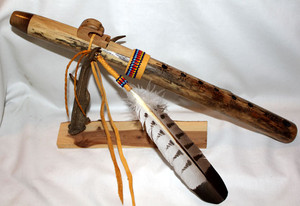
The wood from the elder plant is hard and has been used for combs, spindles and wooden pegs. The hollow stems are used for flutes and arrow shafts while the pith makes good fire tinder.
Elderberry is an excellent native plant to add to your landscape. Examples can be seen in the Native Plant demonstration garden at the Franklin County Extension Service.

Learn more about Elderberry:

Univ. of Missouri Extension Service- From Folklore to Science: Cultivating Elderberry