Showing posts with label annual flowers. Show all posts

Monday, August 25, 2014

Flower Arrangements from the Flower and Vegetable Gardens

by Carol Kagan, Master GardenerA few miniature eggplants and a red onion
A few miniature eggplants and a red onion
Look what you can do with flowers from your garden and a little time. Oh, and vegetables, too!
Perfect centerpiece of a picnic table
This lovely centerpiece is made with hydrangeas, different kinds of tomatoes (and  tomatillos) as well as a sunflower. Hosta leaves were used as a base for the basket.
From your yard-zinnias, hosta leaves, Queen Anne's lace, hydrangeas
Master Gardeners of Franklin County created these floral arrangements from flowers and plants in both the demonstration gardens and their own backyards.

Check out the zucchini used for a base and container. Add some greens with different textures, a few colorful flowers and a sprig of parsley.
Zucchini as a base and container
Also, a bell pepper and watermelon. Perfect for this time of year.
There's enough peppers in the veggie garden to eat so use one as a flower vase.
Watermelon with corn, eggplant and lollipop cherry tomatoes
Flowers found in most yards: hostas, zinnias, cosmos, black-eyed susans, Queen Anne's lace and beautiful grasses (if not in your yard, certainly in a nearby field!), hydrangeas, blanket flowers, garlic chives, and petunias.
Hearth basket uses dried grasses for texture
A beautiful hearth basket, or to use by the front door, has sunflowers, dried grasses, blanket flowers and black eyed-Susans.  The stems are not that long but are discarded stems added to the arrangement.
Vegetables and herbs with a few blooms and grasses tucked in
And here's an attractive basket full of vegetables with some herbs tucked in as well as a few dry grasses.

Go out in your yard and find a few blooms, a few green leaves, and maybe a vegetable or two and put together you own celebration arrangement of summer's bounty.

Thursday, April 24, 2014

Heirloom Plant Varieties Inherit More Than a Good Harvest

Home Gardeners Chose Plants with Better Flavor & Interesting History
 
by Carol Kagan

Heirlooms provide a sense of history. The old wardrobe from Great Aunt Rose’s attic, an antique hand-carved rocking chair, and a rusty tool from a local auction carry a sense of history, of the people who used them.

This holds true for heirloom plant varieties. Many gardeners are drawn to the stories behind the names. ‘Radiator Charlie’s Mortgage Lifter’ tomato came from radiator business owner, “Charlie,” who came up with a large, meaty and productive variety that he sold during the depression. He used the money from this side business to pay off his mortgage.

“Heirloom seeds are usually more than 50 years old and have been passed down from generation to generation,” said Kathy McFarland, Baker Creek Heirloom Seed Company.  “This means they come with fascinating stories and heritage from years past.”
‘Aunt Lou’s Underground Railroad’ tomato has been traced back to Kentucky through Ripley, Ohio. The seeds were carried by an escaping slave as he traveled the Underground Railroad. The tomato is characteristic of those grown in that era.

Aunt Lou's Underground Railroad Tomatoes (Ole Farm House)
While the stories don’t enhance flavor, shelf-life, color, or fragrance, they are a way to connect to our plant and flower heritage.  “Heirloom seeds have often been handed down as family favorites,” said Chris Mayer, Director at Wilson College’s Fulton Center for Sustainable Living.

Heirloom varieties are open-pollinated which means that, unlike hybrids, seeds you collect from one year will produce the same plants the next year. “Using heirlooms helps preserve the gene pool and assure that resilience from pests, diseases and climate are built into the system,” said Mayer.
Home gardeners, unlike commercial growers have the luxury to choose what they grow. Many choose these vegetables and flowers for taste, shape, hardiness and color not found in hybrid selections.
Bullnose Pepper
(Geo. Washington's Mount Vernon)

Originally from India, Bullnose Peppers (Capsicum annuum) have been in U.S. gardens since the mid-1870’s. Thomas Jefferson grew these sweet peppers and are still grown at Monticello. They ripen early, withstand bad weather and their thick skins make them ideal for pickling, stuffing and raw with dips. While 20 seed companies offered these over 25 years ago, today vendors are rare and seeds often “out of stock.”


Tomatoes are the one vegetable that has a wide range of shapes, colors, taste and growing habit. Cherry, slicer, beefsteak, or canning types are available as are pink, orange, white and striped varieties.
“Most heirlooms taste better than the hybrid and genetically modified produce because these have been bred and selected for generations based on how they taste,” said McFarland.
'Arbuznyi' Tomato
As evidenced in the annual Tomato Tasting Day at Penn State Extension, Franklin County, there is a wide variety of taste. While shoppers may avoid any misshapen or blemished tomato in the grocery bin, home gardeners seem content to relish the taste over the appearance.
Pennsylvania heirloom tomatoes include Brandywine, reported to be introduced in 1885 by Amish farmers in Chester County. Other Mennonite and Amish heirlooms include Hahnstown Yellow, Amish Oxheart and Eva's Amish Stripe.
Brandywine (TomatoFest)
As for heirloom flowers, they often have better fragrances and more unique shapes than the usual offerings in garden centers. Introduced in 1792, the Cup and Saucer plant (Cobaea scandens) has a floral-honey fragrance and the cup-shaped flowers open pale green and turn dark purple. The green sepals at the base form a saucer. Mayer noted that saving seeds from heirlooms allows gardeners to enjoy the same variety year after year.
Cup and Saucer plant (Cobaea scandens)
Steve Bogash, Penn State Extension horticulture educator based in Cumberland County said, "With the rapid growth in vegetable gardening, demand promises to be higher than ever, if [you want] specific varieties of vegetables … for the coming season, you may want to get your [seed] orders in early."

'Violetta Itallia' Cauliflower (Baker Creek)
The window for seed starting to transplant in mid-May has closed. Gardeners seeking heirloom or unusual varieties probably won’t find them at the local garden centers or nurseries.
Why are the Master Gardener plant sales different than others?

           Heirloom and unique varieties, most not offered at garden centers, are growing in the greenhouse. Plants such as ‘Mortgage Lifter,’ and ‘Brandywine’ tomatoes are among over 50 varieties growing. ‘Bullnose’ peppers, ‘Cup and Saucer’ flowers, ‘Violletta Itallia’ cauliflower, ‘Brunswick’ cabbage  and many more vegetable and flowers will be available
           In southern central Pennsylvania the last frost date is May 10. With the Greenhouse Sale on May 9 (10 a.m. to 2 p.m.) and the Plant Sale on May 17 (9 a.m. to 1 p.m.) customers can transplant with no need to hold plants until the last frost date.

           Locally grown plants, nurtured by Master Gardeners in their Franklin County home landscapes, have been divided out and potted up to sell.
           Master Gardeners available to offer assistance for choosing and caring for the plants offered.

More links:
Seed Catalogs -Tomatoes 2012
Early Veggie Harvest
2011 Tomato Day Results
Time to Pick Your Tomatoes for 2014
Baker Creek Seeds
Wilson College Fulton Farm


Friday, February 22, 2013

Impatiens Alternatives for 2013

Horticulture Educator, Steve Bogash, guest blogs on alternatives to impatiens, which were devastated last year with a new disease, Impatiens Downy Mildew, (Plasmopara obducens).

Photo Courtsey IFAS Palm Beach Extension
Last season, we at Penn State Extension started getting calls about Impatiens losing their leaves and collapsing long before frost. The best calls were requests for bunny rabbit control as gardeners thought that rabbits had eaten all of their Impatiens’ leaves.

It turns out that we have a new disease, Impatiens Downy mildew, that specifically hits what most of us know as the “Common Garden Impatiens”, Impatiens walleriana. (Busy Lizzy) This disease does not infect other plants as of this time. There are other species of Downy mildew that infect most every plant if the pathogen is present and the conditions are right. However, it is very important to note that this disease does not infect New Guinea or Sunpatiens or any other flowers or herbs.

Downy Mildew on Impatiens
This disease was first reported in the United States in 1942. Since then, there have been sporadic outbreaks, but things started getting serious in 2004. Then widespread regional outbreaks were reported in 2011. The map showing where it was found in 2012 does not leave much of the U.S. disease-free.

Pennsylvania, like many states is a hotspot for this disease. If you had infected plants in your flower beds last year, then it is extremely likely that things will get worse this year. This pathogen overwinters quite well and can persist for many years.

How do you know if your Impatiens had it last year?
  • Yellowish or pale-green foliage
  • Downward curling of the leaves
  • Distorted leaves
  • White to light-gray fuzz on the undersides of the leaves. There are excellent images on the web if you search for “Impatiens Downy Mildew.”
  • Emerging, new leaves that are smaller than normal and discolored.
  • Flower buds that either fail to form or abort before opening.
  • Stunted plants
If you have relied on Impatiens for color in your shadier areas in the past, things are going to change at least until plant breeders come up with resistant varieties. For now, your best options are to use other plants that still perform well in the shade, and if you are fortunate enough to have avoided the disease so far, cull infected plants quickly if you see symptoms. Also, healthy-appearing plants adjacent to the diseased plants should be culled. Do not compost these plants, dispose of them.

Landscapers and those holding Pesticide Applicators Licenses have an additional option with an array of fungicides which if applied properly (timing and rate are very important) can control this disease. Home gardeners have a single active ingredient, phosphonic acid, marketed as Agri Fos, from Monterey Products and Exel LG from Organic Laboratories that should provide good control if used according to their labels.

The best option for many of us is to use alternative plants that perform well in the shade. Here are some to consider:

Begonia 'Black Fancy' - UGA 2012 Trials
Bigleaf begonias: The Penn State Flower Trials at the Southeast Research and Extension Center (Manheim area) identified several of these as superior performers. Look for the Whopper series.


Picture Courtesy of Cornell University

Wax begonias: These are a mainstay in the shade for many gardeners as they are compact, have good leaf color and texture and are available in market packs for larger plantings.

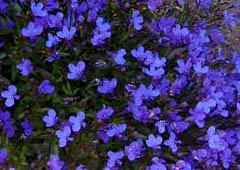
Lobelia erinus - Picture Courtesy of Cornell University
Lobelia: While they will perform best in the sun, they will tolerate partial shade.

Impatiens hybrid 'SunPatiens Compact Electric Orange'
SunPatiens: the plant-growing industry is currently looking at these as the go-to replacement as they are resistant to this disease even under heavy pressure and there are both upright and spreading types.

Impatiens hawkerii 'Tamarinda Orange Orchid'
New Guinea Impatiens: As with SunPatiens, New Guineas are resistant to this disease. In addition, there are some really interesting variegated types.

Torenia fournieri - University of Illinois (Wishbone Flower)
Torenia: This underused plant is worth a look as it performs well from partial to full shade.

Solenostemon 'ColorBlaze Marooned'  Coleus
Coleus: look for those that are labeled for shade.

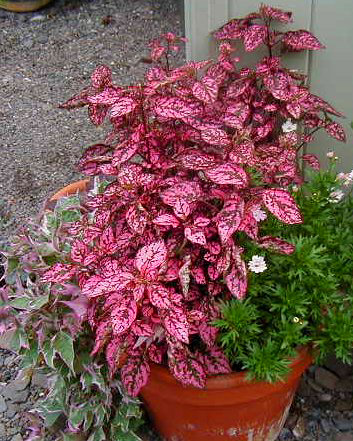
Picture Courtesy of Cornell University
Polka Dot Plant: Interesting spotted foliage plant now in many hybrid forms. It is shade tolerant, but not truly dark areas.

Alternanthera 'Purple Knight' (Joseph's Coat)
Joseph’s Coat: Another interesting foliage plant that does well in partial, but not heavy shade.

Our shady areas will probably look a bit different for the next several years, but there are some good options to Impatiens. Go to the SunPatiens’ website for advice on spacing, learn what this disease looks like and plan for another great gardening season.

Update: March 9, 2013.  Master Gardener Tina Clinefelter (Clinton County) of Gardening in the Keystone State, adds her alternative selections to the list.

Update: March 20, 2013.  Illinois Extension has more on the disease, with links to more alternatives from Michigan State University.

Update: March 23, 2013.  The University of Maryland's Home and Garden Information Center describes the disease and offers alternatives here.

Update: April 9, 2013.  Steve's counterpart for Buck's County, Educator Scott Guiser has a post on the subject which you can read here.  He also links to the Michigan State Q&A and another alternatives list from Ball Seed Company.

Update: April 19, 2013.  Washington Post horticulture writer Adrian Higgins covers the topic here.

Tuesday, October 23, 2012

Favorite Annuals

Susan Harris of the Garden Rant wants to know about your favorite annuals.  Here are mine, with some links to pictures elsewhere.

Annual favorites in my gardens and containers include:

1. Ornamental Sweet Potato Vines
2. Ornamental Millets (Pennisetum - Jade Princess, Vertigo and Purple Majesty)  Some background here.
3. Castor Bean Plant  (introduced to me by Bill Dorman and  Wicked Plants)
4. Four O'clocks - Mirabilis jalapa
5. Red and Blue Salvias
6. Japanese Ornamental Corn
7. New this year - Salpiglossis
8. Will try next year - Harmony Strike series of New Guinea Impatiens
University of Georgia Annual Trials.  Penn State Extension Annual Trials. 2009. 2010.

 Kathy Engle's Garden.

Saturday, October 6, 2012

New Guinea Impatiens "Harmony Strike"


Harmony Strike Orange
 

Harmony Strike White
I was in Landisville on Friday, rescuing ornamental sweet potato roots (more on that in a later post), and took some time to check out some of the other annuals that were trialed this year, since I missed July's Summer Garden Experience.

I was particularly impressed with the new series of New Guinea Impatiens (Impatiens hawkerii) from Danziger called the "Harmony Strike" series.

Harmony Strike Plum


Six different flower colors on beautifully variegated green and yellow foliage.

Harmony Strike Pink


Those of you despondent about the downy mildew disease on regular impatiens (Impatiens walleriana) have a great alternative here, since New Guinea impatiens are resistant to the disease.


Harmony Strike Orchid
 Not pictured: Harmony Strike Salmon.  The University of Georgia also had them in their 2012 trials.  They should make a nice annual addition to shade containers (along with coleus and begonia), or in your shade gardens.

Thursday, August 26, 2010

Best Annual Flowers in 2010

SunPatients in Full Sun
Alan H. Michael, Penn State Cooperative Extension Educator and Director of the Annual Flower Trials at the SE Research Center in Mannheim, PA has released the winners for 2010.

The objective of the trial is help gardeners, landscapers and commercial growers select the best annual flowering plants. This year we saw constantly high temperatures above 90 degrees F. with many days at or near 100. Little rain fell for weeks on end, and then we received sudden downpours of 2-3 inches with winds exceeding 40 mph, then back to heat wave conditions. The best varieties must not only tolerate, but also thrive under these conditions. They must exhibit excellent heat tolerance, sufficient vigor to recover from storm damage, disease and insect resistance, and the ability to produce new attractive leaves and flowers. Here are some of the best plants for 2010 based on their performance:


SunPatient

‘SunPatiens Series’ (Impatiens Hybrida) is similar to New Guinea Impatiens, but sun tolerant. They are bred by Sakata Seeds and sold by Paul Ecke Ranch. The whole series is attractive and blooms all summer in full sun. They remain compact and do nicely in either containers or landscape beds. ‘SunPatiens Spreading Corona’, an orange variety, ‘SunPatiens Compact Blush Pink’ and ‘SunPatiens Compact White’ are the top three, although all ten varieties performed well this year.

Jade Princess

Jade Princess

ORNAMENTAL MILLET – This grass placed in the top ten for the second year. Most grasses are grown for their leaves and secondarily for their flowers. ‘Jade Princess’ from Ball Horticulture (Pennisetum glaucum) is the exception. A compact ornamental millet that grows 24-30” high, it is excellent in a mass planting or containers. Its light green foliage produces tan-pink flower heads that turn many shades of brown with no pollen. Consumers selected it as our number one variety at the Penn State Consumer Day on July 31, 2010.


Pow Wow Wild Berry

ECHINACEA – This variety is an improved native coneflower, ‘PowWow Wild Berry’ (Echinacea purpura) bred by PanAmerican Seed. It’s showy, with 3 – 4” flowers that have an intense deep rose/purple color and is hardy to zone 3. It received the 2010 All American Selection Award. A seed cultivar, it works well in both gardens and containers due to its basal branching. Reaching a height of 24”, it begins blooming in April when it receive 14 hours of daylight. Combined with its sister coneflower, ‘PowWow White’ it makes an eye-catching display.

Vertigo


GRASS – The new introduction ’Vertigo’ (Pennisetum purpureum) is part of the Graceful Grass series from Proven Winners. The stunning mahogany foliage grows about 3 foot high in containers and about 4 foot in landscape. It makes a wonderful backdrop for annual flowers.

Vivid Yellow Portulaca


PORTULACA/PURSLANE – The Pazzazz Series of portulaca (Purslane sp.) from Danziger of Israel was far and away the talk of this trial year’s trial. The series had outstanding flowering with ‘Tangerine’ and ‘Vivid Yellow’ the top varieties. They took all the heat and drought we could toss their way and they asked for more. If only they would stay open longer during the day, they could be the number one plant this year.

Insect problems:

During the heat waves of July, Western flower thrips became a problem; we used sprays to reduce numbers. We then applied a biocontrol using a predatory mite ‘Cucumerous swarovski’ to keep them under control. Aphids were a problem, but by selecting soft (organic) insecticides we allowed natural biocontrol to develop.
The biggest problem in August and September is caused by a the same caterpillar that affects sweet corn, the Corn Ear Worm, but it is known as the budworm in flowers! The adult moths fly up from the south in August and lays its’ eggs on the youngest flower buds of petunias, geraniums and callibrachoa. It mines the inside of the buds, leaving a small, barely visible hole on an unopened bud. Control can be obtained by applying weekly applications of the biocontrol called “BT” (Bacillus thurenginsis) in August.

Disease Problems:

The internal leaves of petunia and calibrachoa began to turn brown during the few wet periods we had between heat waves. Diagnosed, as Alternaria Blight, similar to early blight on tomatoes, it required two sprays of Daconil – chlorothalonil fungicide to bring it under control. We also saw some Rhizoctonia blight that caused leaf death. Sadly no good biocontrol exists for these pathogens as of yet.
For complete results of the Penn State Variety Trials go to the website:

http://stores.trialgardenspsu.com/

Saturday, July 17, 2010

Summer Garden Experience 2010

You are cordially invited to the “Summer Garden Experience”, A Cornucopia of Ideas at the Penn State Horticultural Research Farm
9 AM - 2 PM on Saturday, July 31, 2010, 1446 Auction Rd, Manheim, PA(2.6 miles west of Rte 72 on Auction Road)

(Picture at left from Landisville Website)


Carpool and come early. The entrance fee, including parking, is $10/vehicle. This covers all events except Kid’s Camp and the Autumn Container Garden workshop.

WHO’S INVITED?

You, your family, friends, and anyone interested in learning more about gardening and Penn State horticulture research.

WHAT IS THE SUMMER GARDEN EXPERIENCE?

It’s the savor of summer on the farm. Join the Penn State Capital Region Horticulture Team for our 5th annual open house event showcasing Penn State horticulture and agriculture research with farm wagon tours, variety trials, speakers, demonstrations, and much more. Come for a fun day full of information you can use in your own garden!

WHAT IS THE PENN STATE SOUTHEAST AG RESEARCH EXTENSION CENTER?

The Southeast Center, part of Penn State University’s College of Agricultural Sciences, is located in Lancaster County. Penn State researchers, Extension educators, and the USDA conduct cultivar testing of grain crops, forages, annual and perennial flowers, flowering crabapples, strawberries, tomatoes, pumpkins, and other horticultural crops. They also study disease, insect, and weed pest control, cover crops, inoculants, fertility, and crop management practices.

Featured presentations by leading scientists include:

Dr. Lee Reich - insight into growing worthy but less common fruits, including natives such as pawpaw, persimmon, and juneberry, that can be incorporated into an edible landscape. Lee also describes his system for getting rid of weeds in the garden. Lee, an avid “farmdener” (more than a garden, less than a farm) is a wellknown garden writer, lecturer, and consultant whose works include The Pruning Book and Growing Fruits in Your Backyard. His weekly gardening column appears in newspapers across the country.

Dr. Jay Holcomb - techniques for growing orchids


Steve Bogash - latest techniques and best vegetable varieties to grow in containers – great for small gardens! Steve Bogash is a Regional Horticulture Educator with Penn State Cooperative Extension. Among his specialties are small fruit and vegetable production and marketing and vegetable IPM. 

There will be seminars on a wide variety of subjects including Tree Fruit Espaliers, Herbs in Cooking, Composting, Lawn Care, Identification of Toxic Weeds, Pesticides for the Home Garden, Fertilizing Vegetables, Pollinator Habitat, Soil Health, Water Quality and Green Roof Gardening.


“Ask the Expert” is an opportunity for homeowners to bring their garden questions and problem plant samples to Master Gardeners for diagnosis, identification, and recommendations.

Kid’s Camp has fun activities for ages 5-12. Preregistration and a $5 fee are required. Call Lebanon Extension at (717) 270-4391 to register.

The Autumn Container Garden workshop has a fee of $25 for materials. Call Lancaster Extension at (717) 394-6851 to register.

Bring your camera for a walking tour of the flowers and a tractor-pulled wagon tour of the picturesque farm in the rolling hills of Lancaster County.

It’s a family outing with lots of activities for parents, children, and grandparents.

SCHEDULE OF EVENTS

Keynote Speaker: Lee Reich

9:00 — Uncommon Fruits for the Home Garden
11:00 — Weedless Gardening
12:00 — Book Sale & Author Signing

Feature Presentations

10:00 — Orchids
1:00 — Container Vegetable Gardening

Farm Wagon Tours—10:00, 11:30, & 1:00

Take a tractor-pulled wagon tour of the research farm and demonstration plots with Center Director Alyssa Collins and Extension Educator Tim Elkner.

Variety Trials Tours—9:00, 10:30, & 12:00

Join Trial Director Alan Michael on a walking tour of the colorful display of over 1200 of the newest varieties of annual flowers for bedding and containers.

THROUGHOUT THE DAY…


Short Seminars - Soil Critters, Tree Fruit Espaliers, Composting, Toxic Weeds ID Water Quality, Lawn Care, Herbs in Cooking, Pollinator Habitat Green Roof, Fertilizing Vegetables, Soil Health, Pesticides for the Home Garden

Master Gardener Idea Gardens - Lancaster County Master Gardeners will be on hand to show you their native plant, rain, and pollinator gardens, decorative vegetable and herb garden, and raised beds filled with vegetables, perennials, and annuals.

Information Booth - Get a map, schedule, times and locations for all activities. Sign up for our mailing list.

Master Gardener “Ask the Expert” - Bring your garden questions and samples for diagnosis, identification, and recommendations.


Displays - Learn about rain barrels, food safety, and more.

Native Plant Sale - Purchase great native plants direct from local growers.

SPECIAL WORKSHOP—1:00 Autumn Container Garden ($25.00 fee covers cost of container, plants and supplies) - Make and take a fall-themed container garden with help from Penn State Master Gardeners.


HOW TO GET THERE….

Southeast Ag Research & Extension Center
1446 Auction Road
Manheim, PA 17545-9140
717-653-4728

FROM HARRISBURG: Take PA 283 east toward Lancaster. Exit at Esbenshade Road (just past Mt. Joy exit). Turn left at top of exit ramp. Immediately after crossing over 283, turn right on Auction Road. Follow Auction Road to “T” at Erisman Road. Turn right and follow Erisman Road around the curve. Then turn left, back onto Auction Road (just before the covered bridge). The PSU driveway is on the left as you go around the curve.

FROM LANCASTER: Take PA 283 west toward Harrisburg. Exit at Salunga exit (after the Landisville exit). Turn right at top of ramp, onto Spooky Nook Road. Turn left on Shenck Road (at the old Armstrong warehouse). Turn left across the covered bridge, then turn right on Auction Road. The PSU driveway is on the left as you go around the curve.

FROM YORK: Take US 30 east toward Lancaster. After crossing the Susquehanna River, take second exit (Prospect Road). Turn left on Prospect Road and follow for several miles. About ½ mile after crossing over PA 283 (4-lane highway), turn left on Shenck Road (at old Armstrong warehouse). Turn left across the covered bridge, then turn right on Auction Road. The PSU driveway is on the left as you go around the curve.


All uncaptioned pictures courtesy of Franklin County Master Gardener Laurie Collins, all rights reserved, from the ones she took at the 2009 event
 Please cite her name when using.