Wednesday, June 5, 2013

Thoughts and Meditations on Gardening- 7

Dogwood (Cornus spp.)

After all, I don't see why I am always asking for private, individual, selfish miracles when every year there are miracles like white dogwood. ~Anne Morrow Lindbergh

Mountain Laurel ( Kalmia latifolia)
And miracles of many different kinds from flowers
Zinnia and the Bee
and herbs and vegetables
Rosell 'Jamaican cocktail (Hibiscus sabdariffa)
Little Miracle Peas
and fruits
 
White donut peaches

and trees
 
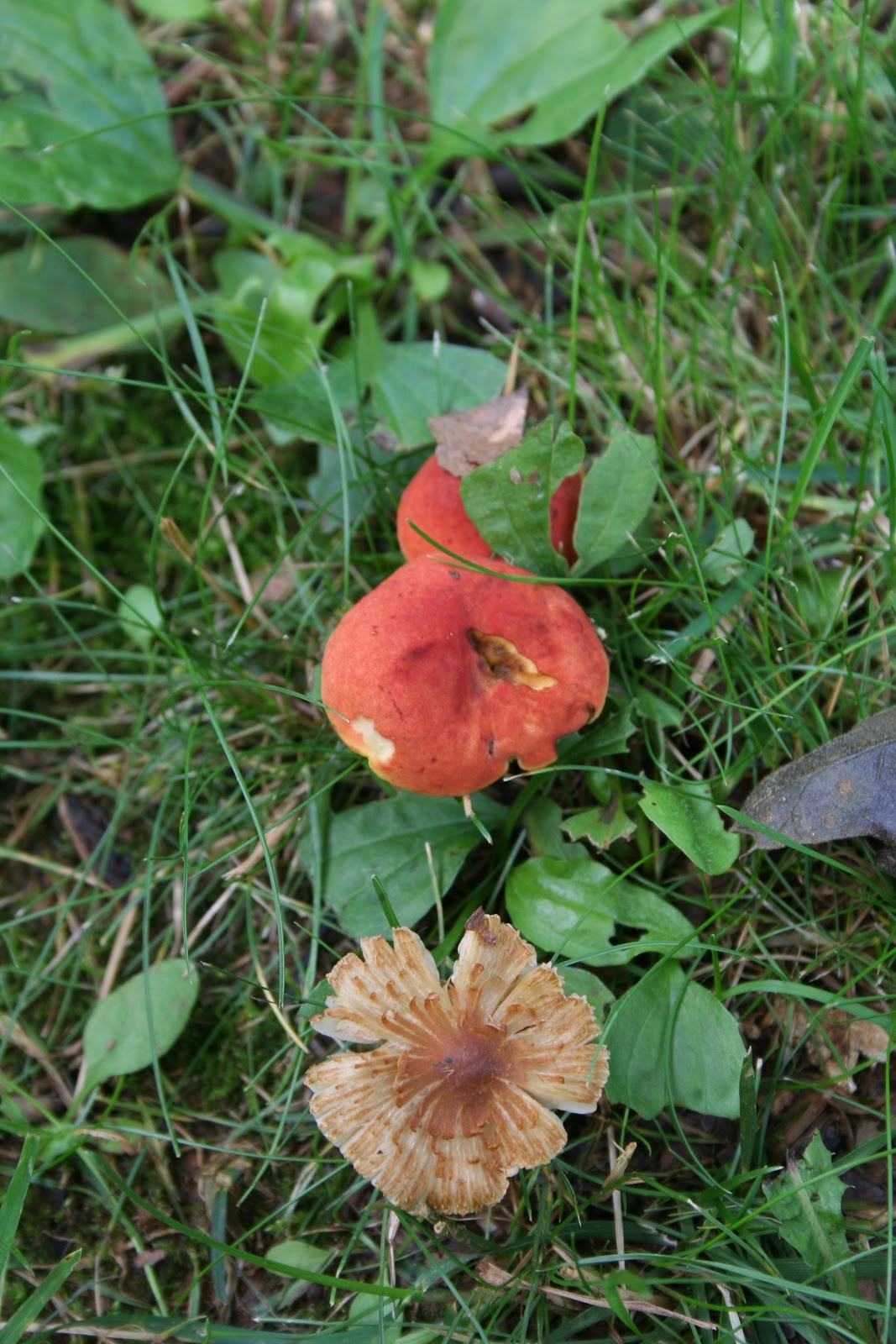
and even fungus.
Don't you agree?


Tuesday, June 4, 2013

Japanese Knotweed - Invasive Weed


Japanese Knotweed at Edge of Eckhart Woods
I've neglected the weed series on the blog since the first post a year ago, but my colleague, George Hurd, the Penn State Extension Environmental/Resource Development Educator for South Central Pennsylvania wrote the following that will appear in this week's Extension News Column, and elsewhere, which prompted me to do this post.  Here's George:
Japanese knotweed is an invasive plant that is causing increased concern in Pennsylvania. Invasive plant species like Japanese knotweed are a considerable threat to biodiversity. Once these species are well established it is sometimes impossible to remove them. When removal is possible, it comes at a high cost financially and ecologically. Researchers at Cornell University estimate that invasive species are costing Americans more than $130 billion every year. Even controlling a single unwanted invader can carry a price tag in the millions.

In some cases, invasive plants are driving our rarest species closer to extinction. According to the U.S. Fish and Wildlife Service, an estimated 42 percent of the nation's endangered and threatened species have declined as a result of encroaching invasive plants and animals. Recent research has shown that some invasive species can cause the populations of even common species to collapse.

According to the USDA Forest Service, Japanese knotweed is a non-native, invasive plant from Asia that spreads quickly to form dense thickets that exclude our native vegetation. Displacement of native plants can alter the quality and quantity of wildlife habitat. Japanese knotweed can also alter soil chemistry and nutrient cycling. It poses a significant threat to riparian areas, where it can survive severe floods and is able to rapidly colonize scoured shores and islands. Once established, populations are extremely persistent. It shades out everything underneath it, preventing forest regeneration, eliminating populations of understory plants, and essentially stopping natural succession. It reproduces by seed and large rhizomes, which may reach a length of 40 to 60 feet. A small piece of rhizome can float down a river and begin to grow once it is deposited on land. These buried rhizomes have grown through 2 inches of asphalt!

According to the Ohio Department of Natural Resources, Japanese knotweed is an upright, shrub-like, semi-woody perennial that can grow to over 10 feet in height. The bamboo-like hollow stems of Japanese knotweed are reddish brown, smooth, stout, and swollen at joints where the leaf meets the stem. The base of the stem above each joint is surrounded by a membranous sheath. Although leaf size may vary, they are normally about 6 inches long by 3 to 4 inches wide, broadly oval to somewhat triangular and pointed at the tip. The minute greenish-white flowers occur in attractive, branched sprays in late summer through early fall. Small winged fruits appear later and are triangular, shiny, and very small, about 1/10” long.

This plant is difficult to control. According to PA DCNR, the key to successful knotweed management is controlling the rhizomes. Mechanical methods alone are largely ineffective. It may be possible to pull single plants if they are not well established and soil conditions allow for complete rhizome removal. Any portions of the root system left behind after grubbing or hand pulling will allow the plant to re-sprout. The herbaceous stems of knotweed can be cut or mowed quite easily. Cutting alone will not control the plant but when performed after June 1 will significantly reduce the height of the regrowth. According to the Penn State Japanese Knotweed Fact Sheet, foliar herbicide applications made after July 1 and before the first killing frost are most effective at injuring the rhizomes. Using both mechanical and chemical controls is one of the most effective forms of knotweed control, particularly for small patches and sensitive areas.
Japanese Knotweed at Edge of Eckhart Woods
The botanical name is Fallopia japonica (was Polygonum cuspidatum) and has been classified by Pennsylvania's Department of Conservation and Natural Resources (DCNR) as invasive, with the potential to threaten Pennsylvania's natural lands.

Another Invasive Plant, Japanese Barberry along with the Knotweed
at Edge of Eckhart Woods
To learn more about Japanese knotweed, plan to attend the Thursday, June 13, meeting of the Cumberland Woodland Owners Association. PA DCNR Bureau of Forestry specialists will speak about the impact of Japanese knotweed and control methods. The meeting will be at 7:00 PM, at the Franklin County Ag Heritage Center which is located at 185 Franklin Farm Lane in Chambersburg. The meeting is open to the public. You do not have to be a member of the association and there is no cost to attend. The workshop is handicap accessible. If you need specific accommodations, please contact Penn State Cooperative Extension in advance at 717-263-9226.

The Cumberland Woodland Owners Association is an organization of private forestland owners and others interested in forestry issues in south central Pennsylvania. The mission of the association is to provide information, education and an exchange of ideas to its members and others about the methods and benefits of proper forest management. For more information about the Cumberland Woodland Owners Association and the meeting, contact Fred Peabody at 717/776-3565 (email: fredp5@earthlink.net).

George Hurd is the Penn State Cooperative Extension Environmental/Resource Development Educator serving Adams and Franklin Counties. Penn State Extension in Adams County is located at 670 Old Harrisburg Road, Suite 204, Gettysburg PA 17325-3404. Phone 334-6271 or e-mail AdamsExt@psu.edu.

Sunday, May 26, 2013

Master Gardeners Visit the National Arboretum


Master Gardeners and guests head south to the Arboretum
While 7 a.m. may not be early for Franklin County farmers, many of the forty-plus people boarding the motor coach on Saturday, May 4, were carrying coffee cups. The Master Gardeners of Penn State Extension, Franklin County and guests were headed to the National Arboretum in Washington, D.C.
Capitol Columns
One of the Arboretum's visual highlights is the Capitol Columns. They were removed from their original site at the U.S. Capitol in 1958, discarded and later reclaimed for display.

On over 446 acres, the Arboretum, established in 1927, not only provides gardens that conserve and showcase plants, but also provides scientific research and education programs. It houses a permanent reference collection of over 650,000 plants specimens for scientific studies and maintains a library of over 11,000 books.
Carol Tebo, McConnellsburg, said she "had never been to the National Arboretum and wanted to see it."

Master Gardener Elmer Greey, Shippensburg, led the tour. Also a volunteer at the Arboretum, Greey was able to point out a number of unusual plants such as the Mexican flowering dogwood (Cornus florida subsp. urbiniana).
Mexican flowering dogwood petals are joined at the top
The National Bonsai & Penjing Museum is a beautiful permanent display of Chinese, Japanese and North American bonsai plants, some in training for over 200 years.

Greey at the Japanese gate - (R) a Japanese white pine trained since 1626
May 4 was also the annual Bonsai Festival with demonstrations, vendors and more.
Deanna Purdy, Hagerstown, MD, "came to see the bonsai" exhibit and festival. She bought a maple tree to create a bonsai, her third project.

And Master Gardener Colleen Johnson, Fayetteville, bought a small barberry tree and a beginner's guide to indoor bonsai. "I thought I'd give it a try," she said.
Master Gardeners in the Herb Garden
In the National Herb Garden, in addition to the knot garden and rose garden, plants are arranged in themed beds - beverage, colonial, culinary, dye, fragrance, medicinal, Native American and others. Master Gardener's involved with the program's demonstration herb garden were especially interested in the dye, fragrance and culinary gardens.

Woad (Isatis tinctoria) produces blue dye
"I'm glad I could see the woad plant I want to use in the dye garden," commented Master Gardener Carol Kagan, Fayetteville. "It's big and needs to be restrained, maybe in a half-barrel or large pot."
(L) Azalea and (R) Dogwood photo by Jenny Haynes
In addition to viewing the largest boxwood collection in the world, visitors saw orange, pink, red, and white azaleas that line the trails up the slope of Mt. Hamilton. Dogwoods were also in bloom.

Viewing the National Grove of Trees while waiting for lunch
Greey led a tour through the conifer collection, one of his favorite work areas, and pointed out many of the special features of the spruces, firs and dwarf pines.
Greey led a tour through the conifer collection
Before heading home, there was a stroll through the Asian Collection which included plants from China, Korea, and Japan.


Colleen Johnson, Linda Horst and others exit the Asian Collection
The weather was pleasant but somewhat breezy. Linda Forbes, Scotland, PA, had come along to spend the day with her friend Master Gardener Barbara Petrucci. At the end of the trip she said, "I saw lots of plants I'd like to add to my yard.

Leftovers from lunch were passed around as the bus headed northward and Linda Secrist, Master Gardener Coordinator had one more quiz for the ride home.


For more information check these links
United States National Arboretum

National Bonsai Foundation


Saturday, May 18, 2013

Plant Sale - 5/18/13!

Congratulations to Georgia and John and everyone else who make today successful!   Great job!

And thanks to all our customers - you made it worthwhile for us.


Hope you are all cooling your heels tonight because you know you have to start planting all that stuff you bought tomorrow :>)

Update by Ray E. - here's a picture taken by MG Nancy Miller of customers Marty and Carol Carmack with your Coral Embers Willow prunings!


Buyers Marty and Carol Carmack


Friday, May 17, 2013

Plant Sale Prep on 5/17/13!

Do we Master Gardeners know how to have fun or what???

Thursday and Friday devoted to preparing for the plant sale - Mission Completed!


Everything is ready; all we need is customers!


Oh and did I mention we worked lunch into the process too?  Thanks Peg!


See you tomorrow: May 18th, 9AM to 1 PM!!!!